A seasonal product cannot follow the same replenishment rule every month. Build stock ahead of the season, sustain availability at the peak and reduce it in a controlled way before the off-season.
Seasonality changes demand and the timing of purchasing decisions. If rising demand is noticed only when sales start, replenishment may already be too late. If purchasing continues at the same pace until the end, cash becomes tied up in off-season stock.
Basic principle: start preparing early enough for ordering, supply, receipt and an allowance for uncertainty. Reduce orders before the final selling day, based on remaining demand and goods already in transit.
1. Identify the season from data, not just the calendar
Where available, start with two to three years of sales or stock issues, analysed weekly or monthly by SKU or relevant product family. Look for recurring increases in demand, the size of the peak and when demand starts to decline. For new products or limited history, use similar products, commercial information and scenarios.
Weather, projects, promotions, holidays, customer budgets and channel changes can shift the start and end of the season.
Useful questions:
- When does demand start increasing, and how many weeks earlier must orders be placed?
- How consistent is the peak from one year to the next?
- Which products share a season and can be planned together?
- Which events could shift this year's season?
2. Build stock before demand accelerates
Products with long lead times, limited supplier capacity or logistics risks require purchasing before the season. Set quantities using forecast demand, available stock, existing orders, demand and supply uncertainty and the desired service level.
Seasonal requirement = forecast demand + safety stock - available stock - confirmed receipts within the useful window.
This is a simplified check, not a universal model. Calculate by item, location and period; company totals can conceal local shortages.
Higher stock during the season can be healthy. It becomes a problem without a planned consumption curve and a clear point for reducing or stopping orders.
3. Track deviations from plan during the season
Compare actual sales with the forecast and remaining stock weekly. If the season is stronger than expected, a quick response protects availability. If it is weaker, reduce future orders before excess inventory accumulates.
Do not track sales alone. Monitor cumulative sales, available inventory, open orders, coverage to the end of the season and goods that will arrive after the peak.
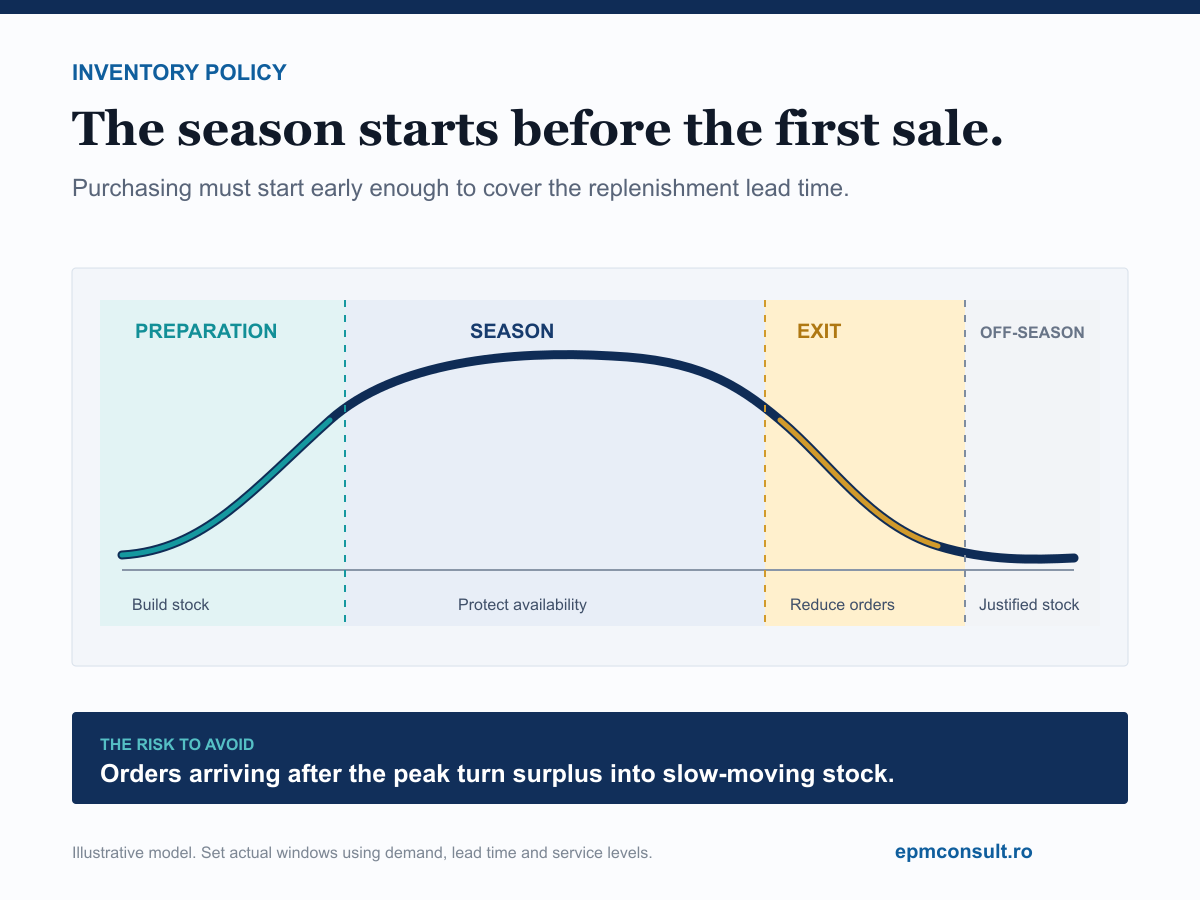
4. Plan the seasonal exit before the last sale
The riskiest seasonal order is often the one that arrives too late. As the selling window closes, reduce or stop orders according to remaining stock and realistic demand until the end.
Decide how to handle likely surplus before the off-season: warehouse transfers, product bundles, controlled promotions, negotiated returns, substitutions or clearance. Delay turns a manageable deviation into slow-moving or non-performing stock.
The goal is not zero stock at any price. It is stock justified by off-season demand and the beginning of the next season.
5. Measure the full cycle
A good season means more than strong sales. Assess peak availability and the quality of inventory remaining afterwards together:
- Service levels and stock-outs during the peak.
- Forecast error by week and season.
- Closing inventory in units and value.
- Share of slow-moving inventory in the off-season.
- Margin lost through clearance and the cost of tied-up capital.
- Orders arriving after the peak has ended.
Seasonal overstock consumes purchasing funds needed for fast-moving products, reduces flexibility and weakens departmental and company performance.
6. Build a replenishment calendar for each seasonal family
Define when preparation starts, the peak window, the final normal order date and thresholds for reducing or stopping purchasing. Update the calendar weekly with actual sales.
Does your inventory support your sales plan?
We can review the data and rules behind your inventory decisions.
Discuss your business