ABC classification is more than a report. It is a starting point for replenishment rules that reflect the role of each product in the portfolio.
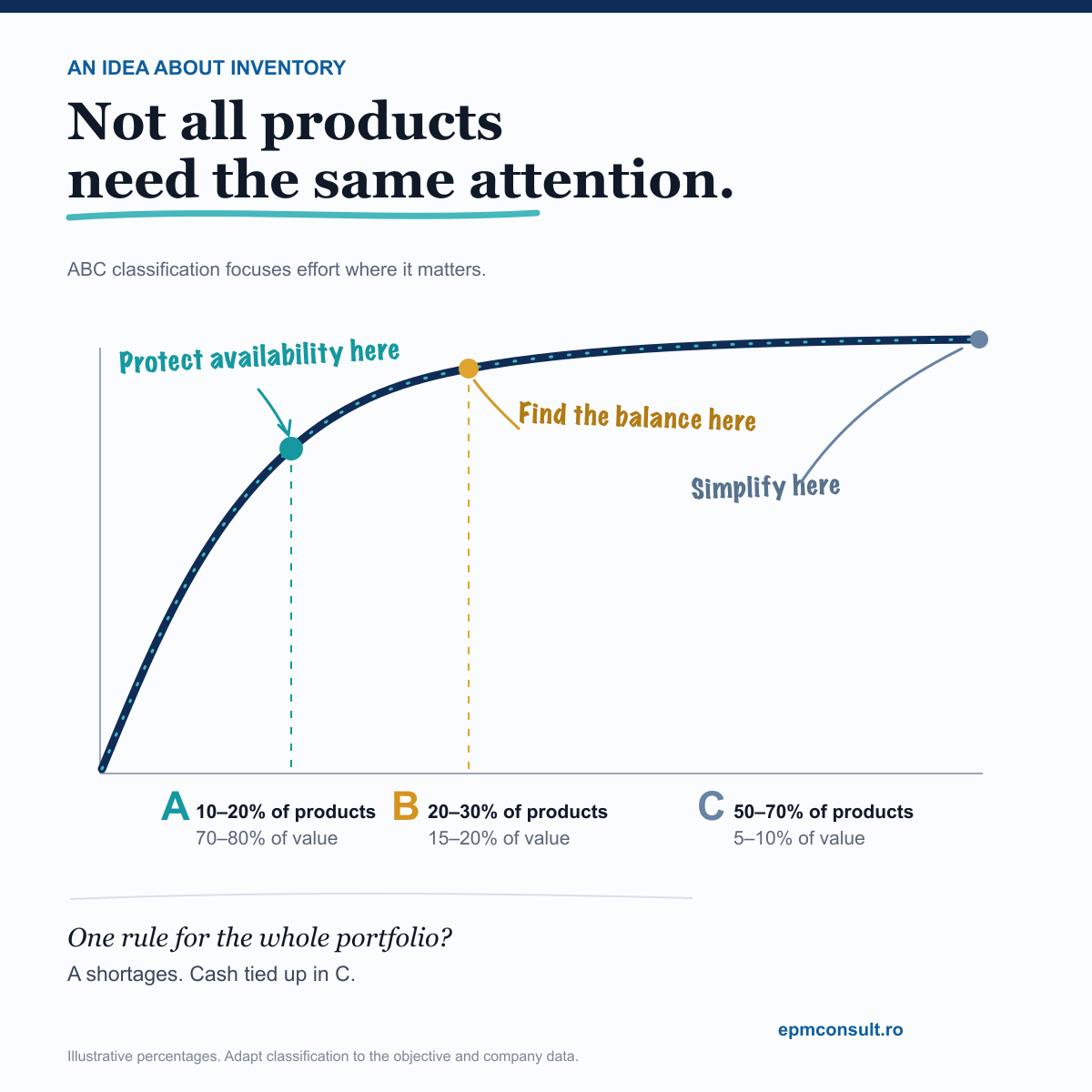
One rule for the entire portfolio often creates two problems at once: shortages of important products and cash tied up in low-impact items.
1. Choose the criterion that supports your decision
Classification can use revenue, gross margin, annual usage value or another relevant measure. Set the criterion before calculating and apply it consistently so results can be compared over time.
Important: a high-selling product is not automatically the most profitable or the most critical. The criterion must match the decision you intend to make.
2. Read the distribution, not just the letters A, B and C
In a typical distribution, a small number of products generates most of the value, while a large share of the portfolio makes a small contribution. Percentages are illustrative: calculate the actual curve from your company's data.
3. Connect each class to an inventory policy
Class A: frequent monitoring, careful forecasting, control of supplier lead times and a high service level where justified.
Class B: periodic review, calibrated safety stock and standard replenishment rules.
Class C: a simpler process, less frequent ordering where appropriate, optimised batches and clear decisions on non-moving items.
The aim is not to reduce stock everywhere. It is to allocate attention and capital differently according to each product's contribution.
4. Recalculate and extend the analysis
Portfolios change, so recalculate the classification periodically. A robust inventory policy combines ABC with demand variability, margin, lead time, minimum order quantity and product criticality.
An A product with stable demand needs different management from an A product with unpredictable sales. Classification provides direction; the final policy comes from combining the measures.
5. Check whether ERP rules reflect the classification
If all items have the same thresholds, order frequency and safety-stock logic, the classification exists in a report but not in operations.
Does your inventory support your sales plan?
We can review the data and rules behind your inventory decisions.
Discuss your business